
The Role of Robotics in Modern Joint Replacement Surgery
Written by Dr. Scott Perkinson
As an orthopedic surgeon who performs robotic hip and knee replacements, I want to explain why robotic-assisted surgery can be a valuable option for most patients. When patients hear the word “robotics” in joint replacement surgery, one of the first questions they ask is: does the robot perform the surgery? Robotic-assisted joint replacement is changing the way we approach hip and knee surgery, helping surgeons perform procedures with greater precision and personalization. Robotics does not replace the surgeon — it enhances our ability to plan and execute surgeries with greater precision and consistency. The surgeon is still making every decision. My goal is always to combine experience with technology to give patients the best possible outcome.
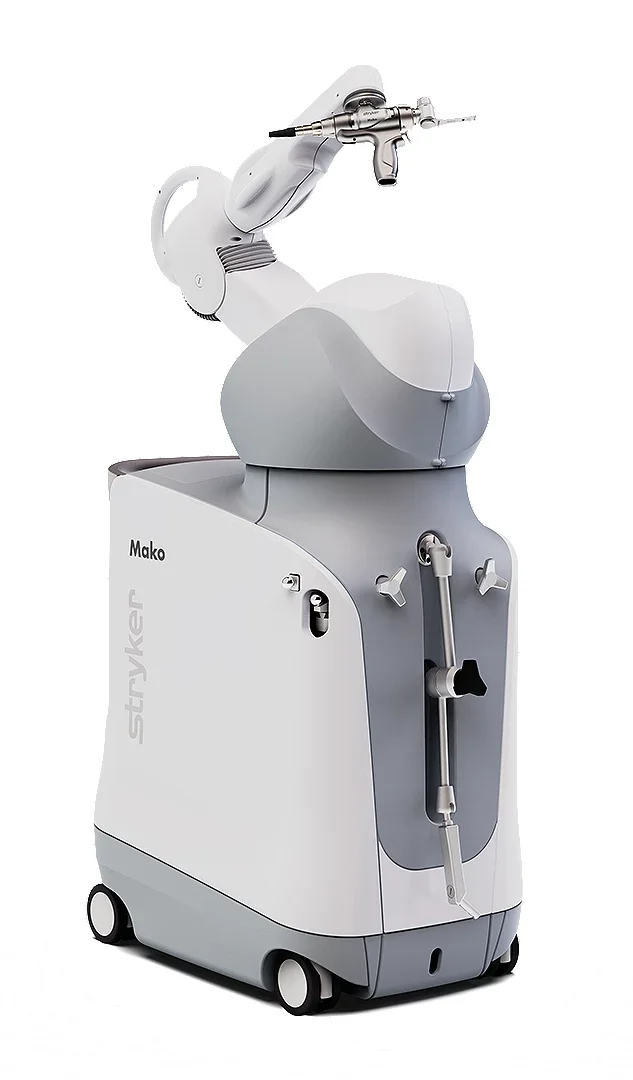
Stryker Mako Robot used to assist in surgeries.
Before surgery, we build a 3D model of your joint from CT imaging. This lets us assess your individual anatomy, limb alignment, and bone quality, then create a patient-specific surgical plan just for YOU. During the operation, the robotic system guides bone cuts and implant positioning according to that plan while providing real-time feedback. The robot helps the surgeon stay within planned boundaries, improving accuracy for component alignment, sizing, and orientation.
Why does that matter for you? Proper implant alignment and soft-tissue balance are closely linked to pain relief, joint function, and implant longevity. Improved precision can reduce the risk of uneven wear, instability, or the need for early revision surgery.
Other practical advantages include more consistent preservation of healthy bone and soft tissues. Because the robot guides specific, measured bone resections, we often limit unnecessary bone removal. This tissue-sparing approach can result in less postoperative pain, reduced blood loss, and faster early rehabilitation. Some patients report shorter hospital stays and quicker return to daily activities, although recovery still depends on individual health and rehabilitation effort.
It’s important to set realistic expectations. Robotic assistance is a tool — outcomes still depend on surgeon experience, patient factors (weight, bone quality, comorbidities), and adherence to postoperative care.
If you’re considering hip or knee replacement, ask about robotic-assisted options and whether your surgeon has specific experience with the system. If you’re considering hip or knee replacement, ask whether robotic-assisted surgery may be an option for you. A conversation with your surgeon can help determine whether this technology fits your individual anatomy, goals, and lifestyle so you can make an informed decision.

Dr. Scott Perkinson
Orthopaedic Surgeon
MD, FAAOS
Dr. Perkinson is a board-certified Orthopedic Surgeon specializing in sports medicine utilizing minimally invasive arthroscopic techniques; robotic joint replacement, including knee, hip, shoulder, and reverse shoulder replacement; hand surgery; and fracture care.
He performs advanced procedures including robotic-assisted knee and hip replacement, anatomic and reverse shoulder replacement, ACL reconstruction, meniscus and labral repairs, rotator cuff repair, and minimally invasive arthroscopic surgery of the knee and shoulder, while also providing comprehensive care for orthopedic trauma and fractures.
View full profile →