
Hip Impingement and Labral Tears: Causes, Symptoms, and Treatment Options
Written by Dr. Jesse Botker
Hip impingement and labral tears are common causes of hip pain, especially in active adults. As a surgeon who has specialized in hip arthroscopy for over 15 years and routinely performs a high volume of these procedures, I’ve seen how early understanding and treatment can significantly impact outcomes. Understanding what’s happening in your hip can help you make informed decisions about care.
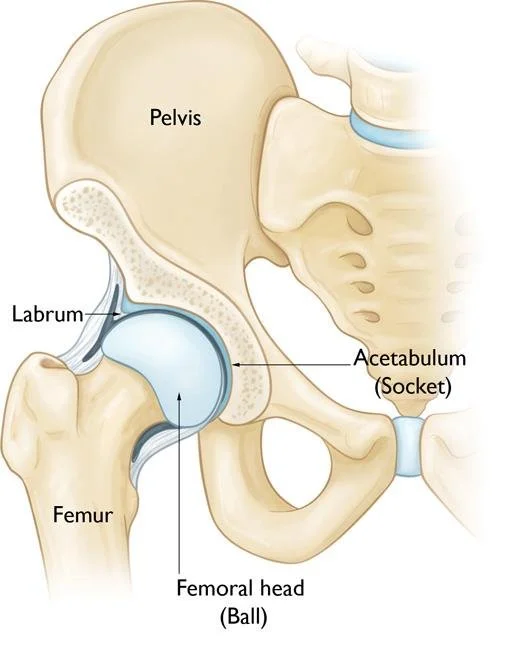
This image shows a healthy hip where the femoral head fits directly into the acetabulum socket.
Image courtesy of the American Academy of Orthopaedic Surgeons
Hip impingement, also called femoroacetabular impingement (FAI), occurs when the ball and socket of the hip joint do not fit together perfectly. Over time, this abnormal contact can damage the labrum—a ring of cartilage that lines the socket and helps stabilize the joint. When the labrum is torn, patients often experience groin pain, stiffness, clicking, or a catching sensation in the hip.
Nonsurgical treatment is typically the first step. This may include activity modification, avoiding deep bending or pivoting movements that worsen symptoms. Physical therapy plays a key role by improving hip strength, flexibility, and mechanics to reduce stress on the joint. Anti-inflammatory medications can help manage pain, and in some cases, a guided corticosteroid injection may provide temporary relief and help confirm the diagnosis.
If symptoms persist despite conservative care, surgical treatment may be considered. Hip arthroscopy is a minimally invasive procedure where small instruments and a camera are used to reshape the bone causing impingement and repair or trim the torn labrum. The goal is to restore more normal hip mechanics and relieve pain while preserving the joint.
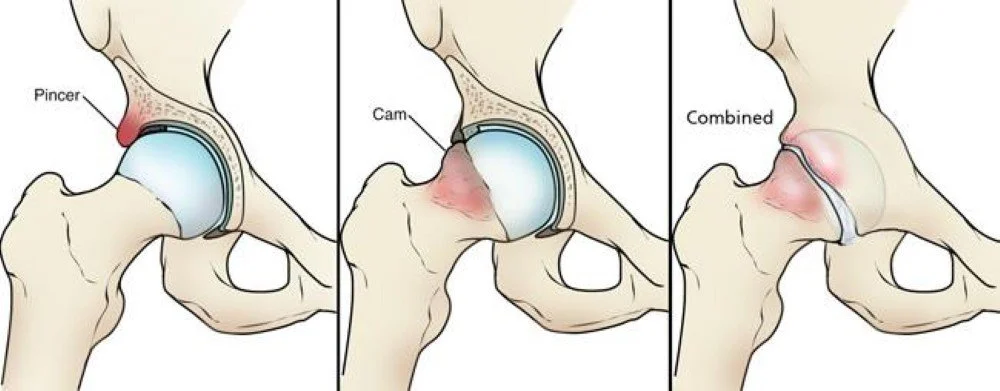
This image shows three different impingements that can cause hip pain.
(Left) Pincer impingement. (Center) Cam impingement. (Right) Combined impingement.
Because hip arthroscopy is a technically demanding procedure with a steep learning curve, it is important to select a surgeon who performs a high volume of these cases. Surgeons with extensive experience in hip arthroscopy are more familiar with the nuances of the procedure, including precise bone reshaping and labral preservation or repair. Choosing a high-volume hip arthroscopy specialist can help optimize outcomes and reduce the risk of complications.
Recovery after surgery involves a structured rehabilitation program focused on restoring motion, strength, and gradual return to activity. Most patients experience significant improvement, especially when the condition is addressed before advanced arthritis develops.
If you’re experiencing ongoing hip pain, early evaluation can make a meaningful difference in outcomes and help you stay active long term.

Dr. Jesse Btoker
Orthopaedic Surgeon
MD, FAAOS
Dr. Botker is a fellowship-trained, board-certified orthopedic surgeon with a subspecialty in Sports Medicine, specializing in the care of athletes and active individuals of all ages.
He performs complex sports medicine procedures, including primary and revision surgeries, anterior hip replacement, and 3D-guided knee and shoulder replacements, and is experienced in both adult and pediatric fracture care.
View full profile →