
From Injury to Comeback: How Performance Lab Helped Aaron Stewart Return to Top Speed
For elite athletes, injuries do more than interrupt training. They challenge confidence, identity, and the ability to compete at a high level. For Minnesota State University track athlete Aaron Stewart, the past two years have been both physically and mentally demanding. Through surgery, consistent rehab, and support from the Performance Lab team, Aaron is now closing in on a full return to peak performance.
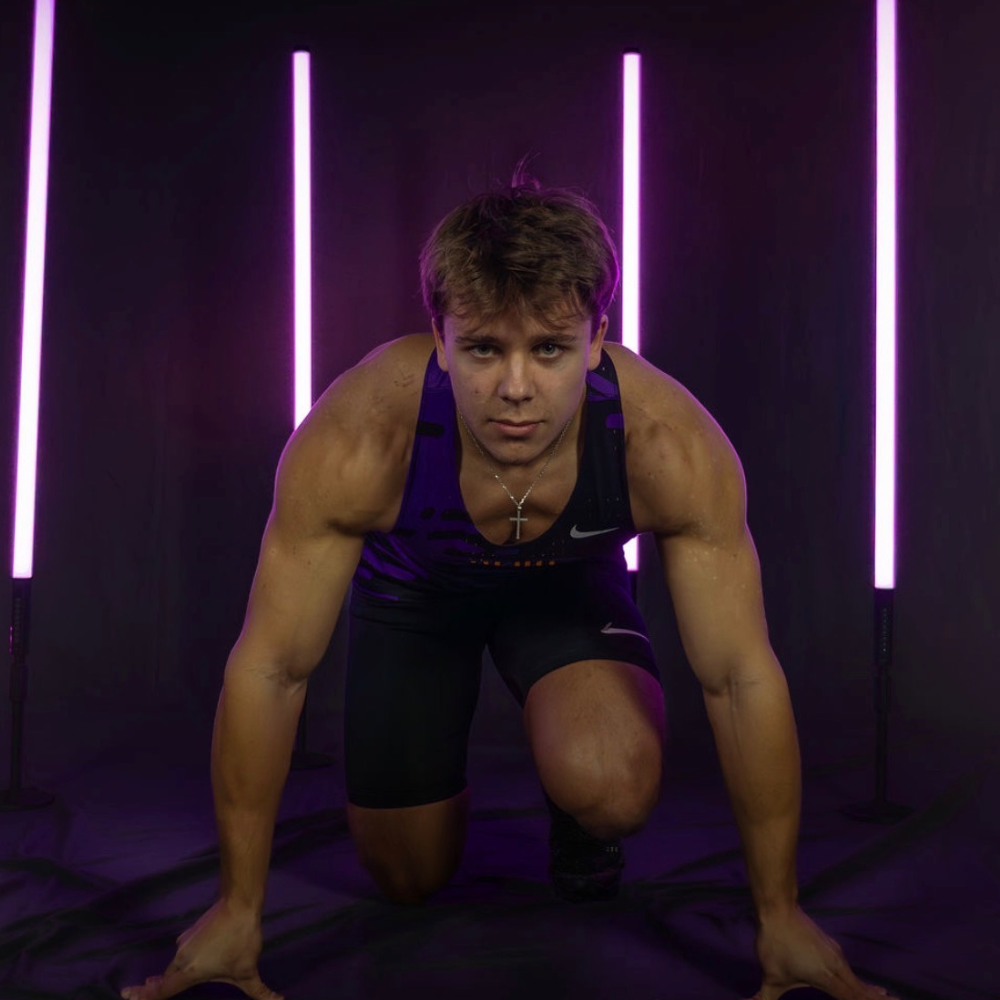
A Proven Competitor
Aaron Stewart, a junior sprinter at Minnesota State University, has been competing at a high level since his early years in Mankato. A graduate of Mankato East, he earned all state honors and collected four state medals during his high school career. He continued that momentum at Bethany Lutheran College, where he made an immediate impact as a freshman, earning Track Athlete of the Year honors and capturing four conference titles across the indoor 60 meter and 200 meter, as well as the outdoor 100 meter and 200 meter events. Following that standout season, he transferred to Minnesota State University to continue competing at a higher level.
Battling Through Injury
Despite his early success, the past year and a half brought significant challenges. Aaron dealt with ongoing groin and core pain that limited his ability to train and compete at full capacity. After multiple X rays and MRIs, he was diagnosed with a sports hernia and underwent surgery in February. Recovery was especially difficult at the start.
“The first week after surgery was the hardest,” Aaron said. “Walking and moving around was extremely difficult. It slowly improved over the first month until I was cleared to begin rehab and more intense activity.” For an athlete who thrives on constant training, the mental challenge quickly became just as difficult as the physical recovery. “I am very active and love working out, so having limited activity was really tough,” he said. “The length of time dealing with the injury also became a major mental battle. It went on for about a year and a half without real resolution until recently.”
Rebuilding at Performance Lab
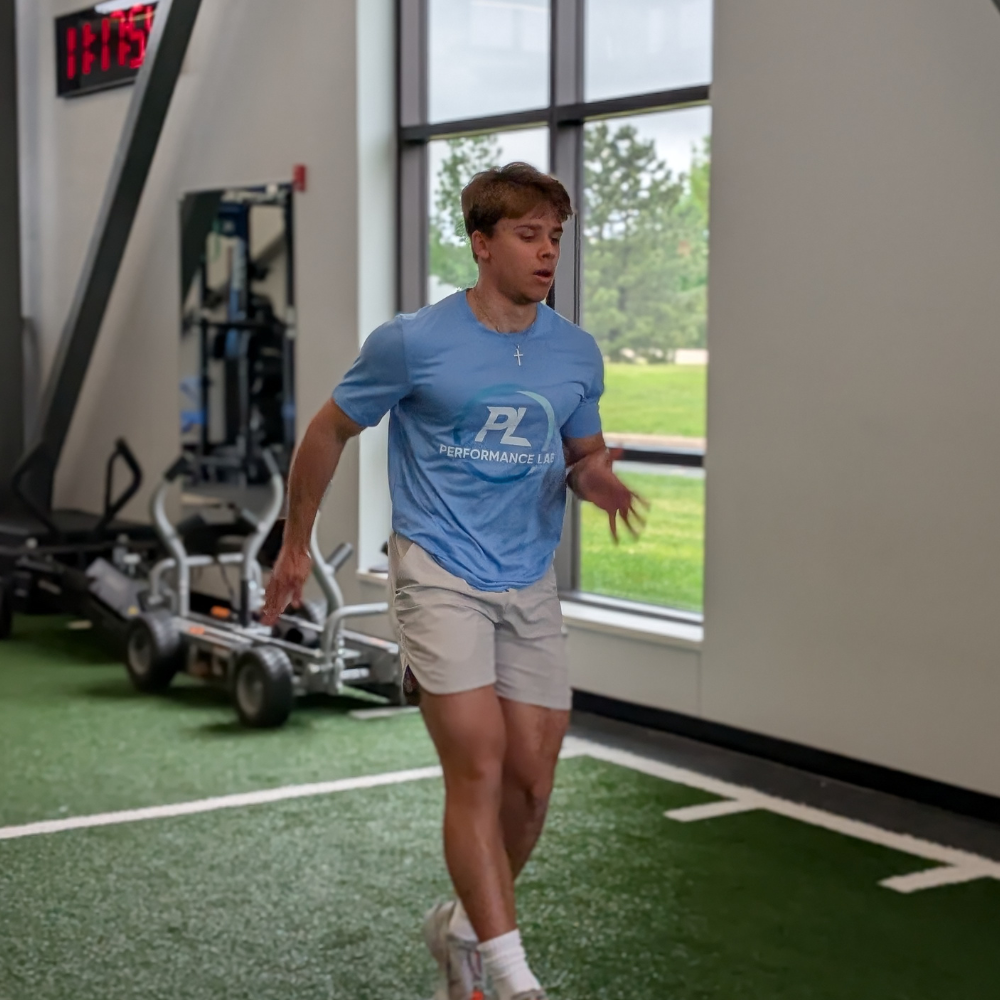
When Aaron began training at Performance Lab in May, his movement was still significantly limited and even basic athletic actions caused discomfort. “I could only do a few movements without pain,” he said. “I could not run, jump, jog, or lift heavy without discomfort.” From there, he began a structured and progressive rehab process with Landon and the Performance Lab team focused on restoring strength, improving movement quality, and rebuilding confidence.
A key part of his progress came from the ability to adapt training around pain while still targeting the same areas. “When an exercise caused pain, we would modify it so I could still train the same area without the discomfort,” Aaron said. As his capacity improved, training shifted toward more advanced speed and explosiveness work, including turf sprints, top speed sessions, and work on the self propelled treadmill. These sessions played a major role in helping him regain confidence in his speed and athletic ability.
He also highlighted the importance of objective feedback through force plate testing, which allowed him to see measurable progress each week and stay motivated throughout the process. “They allowed me to track progress each week and see real improvement over time,” he said.
Focused on the Future
Now, Aaron says he feels closer to 100 percent than he has in nearly two years. The drive to compete and his past success continue to fuel his recovery. “Before Performance Lab, it was hard to enjoy training because of the pain,” he said. “Now I am excited to train again.”
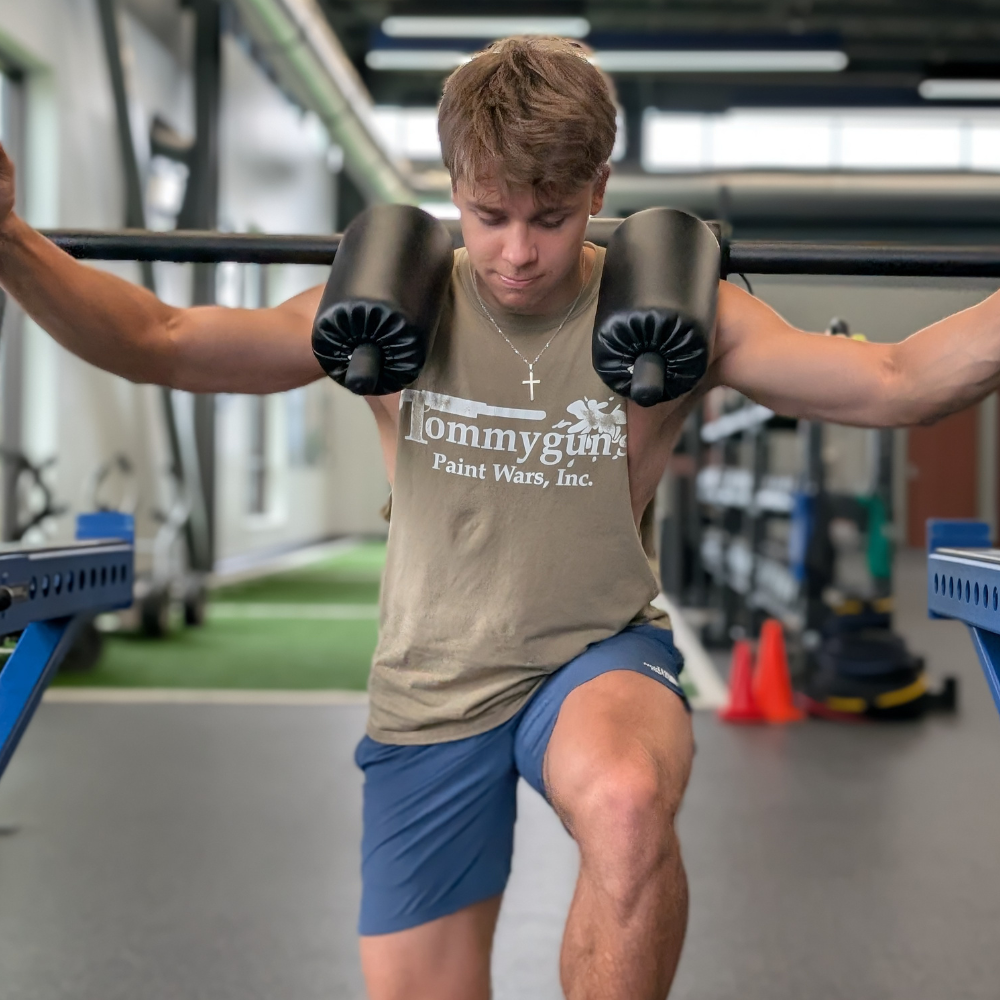
With his return to form steadily building, he is focused on what comes next in his collegiate career, including competing for a conference title and qualifying for the national championships.
More Than Recovery
What began as rehabilitation has turned into a long-term training relationship. “I originally planned to stay at Performance Lab only until I recovered,” Aaron said. “But I enjoyed it so much that I plan to continue through my final two years at Minnesota State.” He credits the Performance Lab staff not only for physical progress but also for consistent support throughout the process.
“Landon and the team have helped me through every step of this process,” he said. “They push me on the hard days and keep me motivated. I am very thankful for everyone at OFC and Performance Lab for everything they have done for me.”