
Written by Dr. Andrew McNamara
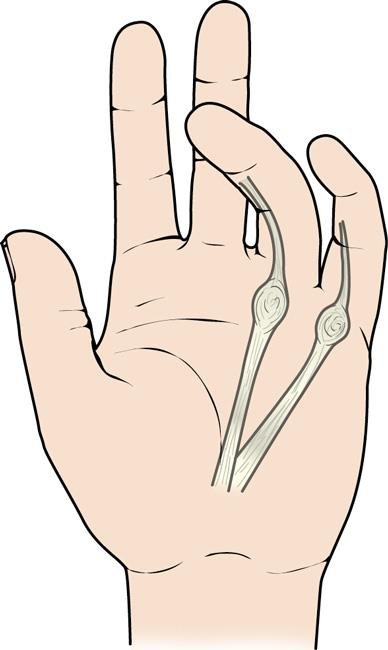
Have you ever noticed a thick cord in your palm that seems to be slowly pulling one of your fingers toward your hand? Maybe you’ve started having trouble putting your hand flat on a table, shaking hands comfortably, or slipping your hand into your pocket without snagging a finger.
If so, you may have Dupuytren’s contracture.
What exactly is Dupuytren’s contracture?
Dupuytren’s contracture is a condition involving the palmar fascia, the layer of connective tissue just beneath the skin of your palm, between the skin and your finger tendons. Normally, this tissue helps support the skin and provides structure to your palmar skin so you can grip objects.
In people with Dupuytren’s disease, this tissue gradually thickens and forms nodules and cords. Over time, those cords can tighten and pull one or more fingers toward the palm.
The ring finger and small finger are the most commonly affected, although other fingers can be involved.
What are the symptoms?
Dupuytren’s disease typically develops gradually. Early on, you might notice:
A small lump or firm nodule in your palm.
Thickened skin or a cord extending toward a finger.
Difficulty placing your hand completely flat on a table.
Increasing difficulty straightening the ring or small finger.
Trouble putting on gloves, washing your face, or reaching into a pocket.
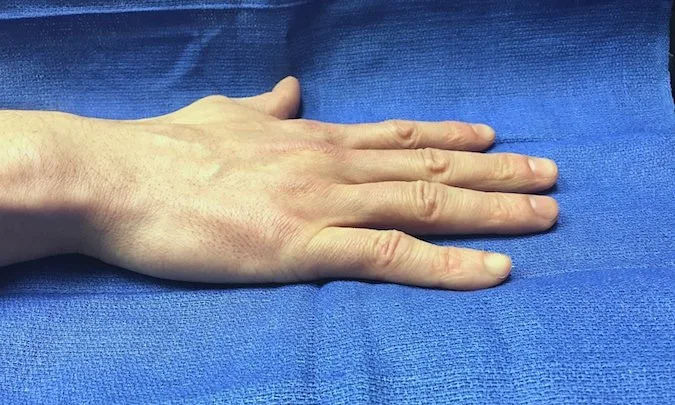
In its early stages, Dupuytren’s disease may cause little discomfort. The main issue is often progressive loss of motion rather than pain.
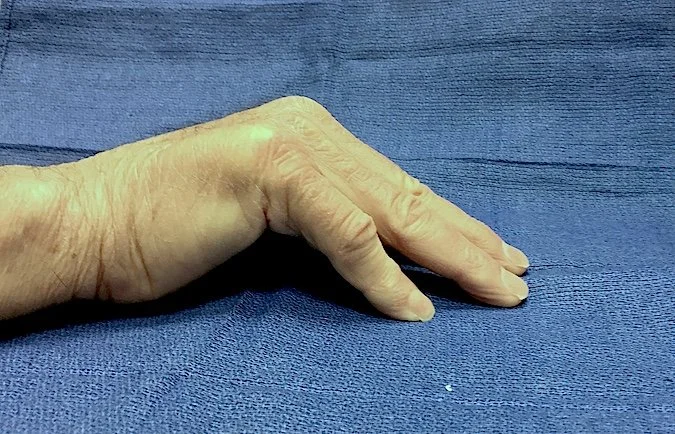
One of the most useful things you can do is the tabletop test: try placing your palm flat against a table. If you cannot straighten your fingers enough to lay your hand flat, it may be time to see an upper extremity specialist.
Your hand doesn’t have to be completely folded into a permanent fist before you seek treatment. In fact, waiting until the finger is severely bent can make correction more difficult.
Why does Dupuytren’s happen?
The exact cause is not fully understood, but genetics play a major role. The condition is more common in people of Northern European ancestry (everywhere the Vikings spread their gene pool) and tends to run in families.
Other factors associated with Dupuytren’s disease include increasing age, male sex, diabetes, smoking, and heavy alcohol use. Having one or more of these factors does not guarantee that you will develop the condition.
And despite what your favorite internet forum might suggest, there is no convincing evidence that simply using your hands too much causes Dupuytren’s contracture.
So no, you probably didn't develop it because you spent decades gripping a steering wheel, holding a golf club, or refusing to hire someone to assemble your furniture.
Do all cases need treatment?
Absolutely not.
If you have a small lump in your palm but can fully straighten your fingers and use your hand normally, observation may be the best approach. Not every lump needs to be removed, and treating Dupuytren’s disease too early can mean undergoing a procedure before it is actually necessary.
However, once a cord begins causing a meaningful contracture—particularly at the knuckle where the finger meets the palm—it may be time to consider treatment. Twenty degrees is a commonly accepted threshold for treatment.
As a hand surgeon, I generally focus on how much the contracture affects your function, how quickly it is progressing, which joints are involved, and what treatment best fits your goals.
The objective is simple: improve finger extension and hand function with the right balance of effectiveness, recovery time, and risk.
Fortunately, we have several options.
Treatment option #1: In-office needle aponeurotomy
The appeal: A quick procedure without a traditional incision.
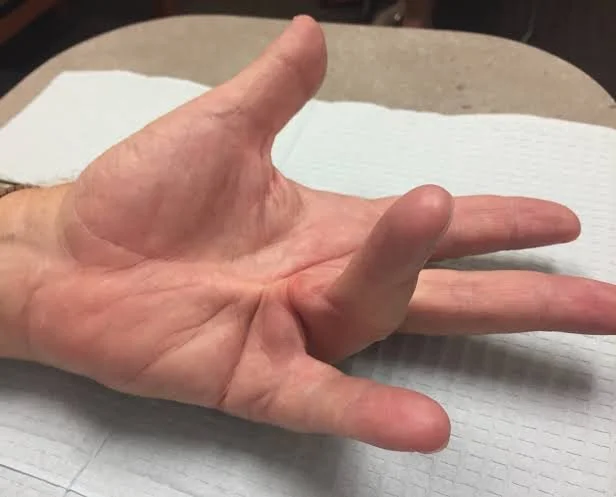
Needle aponeurotomy, also called needle fasciotomy, is one of the least invasive ways to treat an established Dupuytren’s cord.
During the procedure, the hand is numbed with local anesthetic. Using a small needle, the surgeon carefully weakens and divides the tight cord beneath the skin. The finger can then often be straightened, releasing the contracture.
The procedure is typically performed in the office, and many patients are surprised by how straightforward it can be.
No operating room. No general anesthesia. No need to arrange your life around a major surgical recovery.
What are the advantages?
Usually performed in the office under local anesthesia.
No traditional surgical incision or extensive dissection.
Relatively quick procedure.
Typically faster initial recovery than open surgery.
Often allows patients to return to many normal activities relatively quickly.
What are the downsides?
Needle aponeurotomy does not remove the abnormal tissue. It simply divides the cord that is pulling the finger down. Because the underlying disease remains, contractures can recur, sometimes sooner than after more extensive surgery.
There are also risks, including skin tears, nerve or tendon injury, bleeding, and incomplete correction. It is important that the procedure be performed by someone familiar with the anatomy of the hand.
Needle aponeurotomy tends to work particularly well for accessible cords causing contracture at the knuckle joint. Contractures involving the middle joint of the finger can be more challenging to correct completely.
Best for: Patients who want a minimally invasive treatment, value a short initial recovery, and understand that recurrence may be more likely than with surgery.
Treatment option #2: Xiaflex injections
The appeal: Let an enzyme do some of the work.
Xiaflex is the brand name for collagenase Clostridium histolyticum, an injectable medication designed to break down collagen within a Dupuytren’s cord.
Rather than physically dividing the cord with a needle, the surgeon injects the medication directly into the cord. The enzyme weakens the collagen, allowing the surgeon to manipulate and straighten the finger during a subsequent visit, according to the prescribed treatment protocol.
It is a clever approach: instead of cutting the cord directly, we use an enzyme to weaken the tissue that is causing the problem.
What are the advantages?
Can be performed without traditional open surgery.
Avoids a surgical incision to remove the cord.
Often provides meaningful improvement in finger extension.
May be an option for patients who prefer to avoid an operation.
What should you expect afterward?
Xiaflex treatment commonly involves an injection followed by a separate visit for finger manipulation. Depending on the treatment plan, a local anesthetic may be used during manipulation.
Swelling, bruising, tenderness, and temporary discomfort are common. Skin tears can occur when the finger is straightened, and some patients experience substantial bruising or swelling for several days.
Less common but more serious complications include tendon injury, nerve injury, and other significant local tissue injuries. The medication must be injected carefully into the appropriate cord.
Xiaflex does not eliminate the underlying tendency to develop Dupuytren’s disease, so recurrence remains possible.
Best for: Selected patients with a palpable cord causing contracture who want to avoid traditional surgery and are comfortable with the medication's risks, recovery process, and availability.
Treatment option #3: Partial palmar fasciectomy
The appeal: A more definitive treatment for troublesome contractures.
Sometimes, the best way to deal with a stubborn cord is to remove it – A partial palmar fasciectomy is a surgical procedure in which the surgeon makes an incision in the palm and carefully removes the abnormal, thickened fascia responsible for pulling the finger down.
The word partial is important. The goal is not to remove every bit of normal connective tissue in your hand. It is to remove the diseased tissue that is contributing to the contracture while protecting nearby nerves, blood vessels, tendons, and other important structures.
Depending on the severity of the contracture, the procedure may involve the palm alone or extend into the finger. The surgeon then works to restore as much finger extension as safely possible.
This is generally a more involved procedure than needle aponeurotomy or collagenase injection, but it can provide more durable correction for many patients.
What are the advantages?
Removes the diseased cord rather than simply dividing it.
Often provides more durable correction than needle aponeurotomy.
Allows direct visualization of important nerves and blood vessels.
Can address more complex or severe contractures.
May be particularly helpful when the middle finger joint is significantly involved.
What are the downsides?
Surgery comes with a larger recovery commitment. Depending on the extent of the procedure, patients may need wound care, activity restrictions, hand therapy, and sometimes a nighttime extension splint.
Recovery varies, but it generally takes weeks rather than days to get through the initial healing process. Swelling, stiffness, scar sensitivity, and temporary limitations in hand use are common considerations.
Potential complications include infection, wound-healing problems, nerve or blood vessel injury, stiffness, complex regional pain syndrome, and recurrence of Dupuytren’s disease.
And while surgery can provide an excellent improvement, it is not a permanent genetic reset button. Dupuytren’s disease can return even after the abnormal tissue has been removed.
Best for: Patients with more substantial contractures, complex disease, significant middle-joint involvement, or a preference for a treatment that generally offers more durable correction.
So which treatment is best?
There is no single winner for every patient. The right choice depends on the pattern of your disease, the severity of the contracture, your medical history, your priorities, and the experience of your treating surgeon.
Here is a simplified comparison:
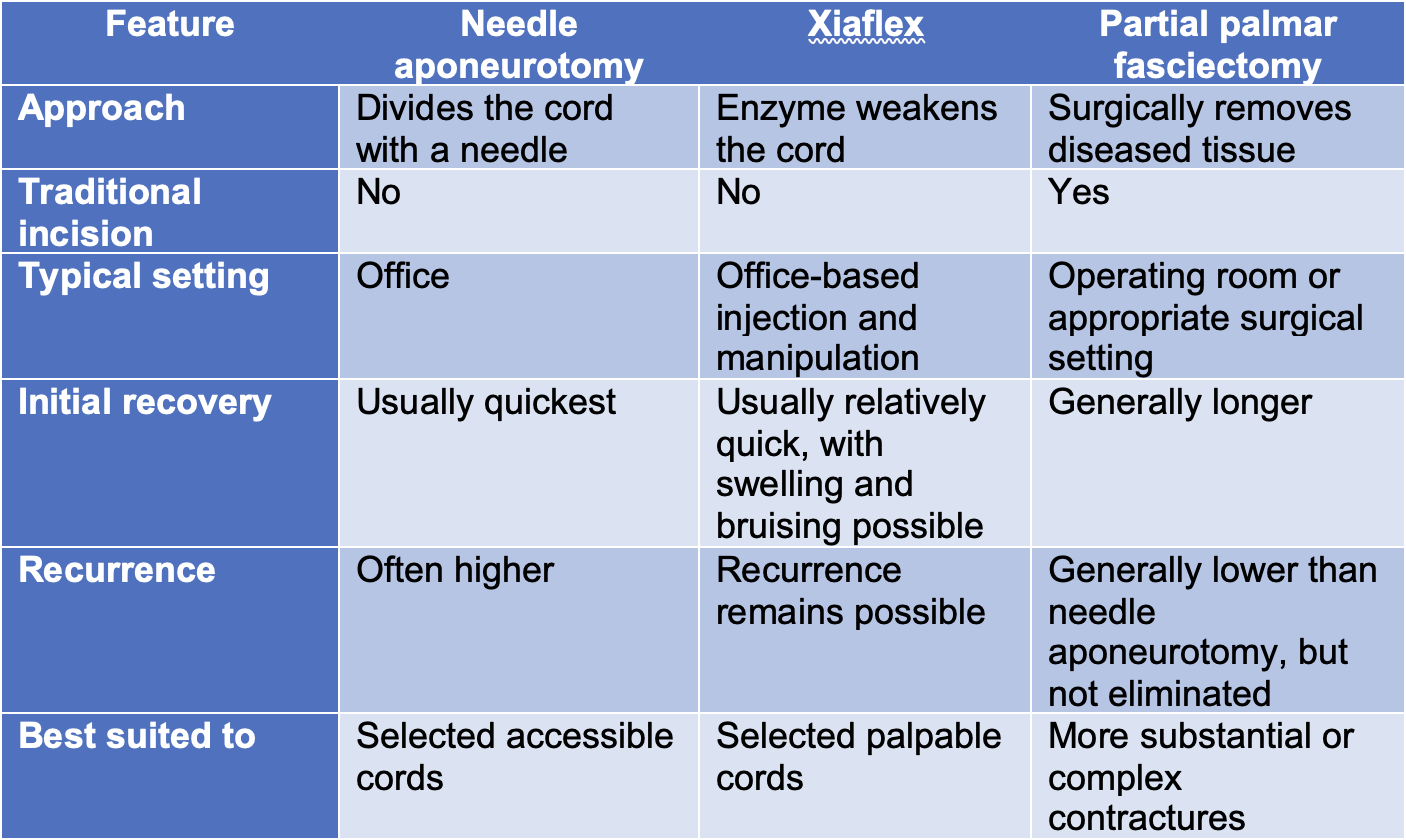
These are general comparisons, not guarantees. Outcomes depend on the individual patient, the joints involved, the severity of the contracture, and the technique used.
Can Dupuytren’s contracture be prevented?
Unfortunately, there is no proven way to prevent Dupuytren’s disease or reliably stop it from progressing once it begins. Stretching, massage, splinting, and hand exercises may help maintain comfort and mobility, but they have not been shown to reliably reverse an established Dupuytren’s cord. If your finger is gradually bending toward your palm, squeezing a stress ball harder or stretching your hand every night is unlikely to make the cord disappear.
The most useful step is to have the hand examined and determine whether observation or treatment makes sense.
When should you see a hand surgeon?
Consider making an appointment if:
You can no longer place your palm flat on a table.
One or more fingers are becoming progressively bent.
You have difficulty putting on gloves or reaching into pockets.
The contracture interferes with work, hobbies, exercise, or daily activities.
You want to understand your treatment options before the contracture becomes more severe.
Earlier evaluation does not mean you need immediate treatment. It means you can understand the condition, monitor progression, and discuss your options before the contracture becomes more difficult to correct.
The bottom line
Dupuytren’s contracture is common, often painless, and usually develops gradually. But you do not have to accept a permanently bent finger if it begins interfering with your life.
As an orthopaedic hand surgeon, my goal is not to recommend the biggest procedure or the newest treatment. It is to help you choose the treatment that best matches your hand, your lifestyle, and your expectations.
This article is for general educational purposes and is not a substitute for an individual medical evaluation.
.

Dr. Andrew McNamara
Orthopaedic Surgeon
MD, FAAOS
Dr. McNamara is a board-certified upper extremity surgeon specializing in the treatment of conditions from the shoulder to the fingertips.
He utilizes advanced techniques, including computer navigation technology, to enhance precision and improve outcomes in shoulder replacement surgery.
His patient-centered approach focuses on understanding each individual’s goals and collaborating to determine the most effective operative or non-operative treatment plan.
View full profile →